Air leaks can make a Winnipeg home feel drafty, unevenly heated, and expensive to run. When warm air escapes through gaps near the top of the house, cold air is drawn in through lower air leakage locations such as basement walls, rim joists, and crawl spaces. This cycle puts more pressure on your heating system in winter and can raise cooling costs in summer.
The good news: many air leaks can be found and addressed before they become bigger comfort, moisture, or energy-efficiency problems.
Why Air Leaks Matter in Winnipeg
Winnipeg’s long winters make air sealing especially important. Even small gaps in the building envelope can allow cold air to enter your living space, while heated indoor air escapes through the attic, exterior walls, windows, and doors.
Sealing air leaks can help:
- Reduce drafts and cold spots
- Make room temperatures more consistent
- Lower energy bills and overall energy use
- Protect against moisture problems caused by warm, moist indoor air reaching cold attic surfaces
- Support long-term energy efficiency and a lower environmental impact
Insulation and air sealing work together, but they do different jobs. Insulation slows heat transfer; air sealing limits unwanted airflow. Adding insulation without sealing major leaks first can leave much of the problem behind the scenes.
Common Sources of Air Leaks in Winnipeg Homes
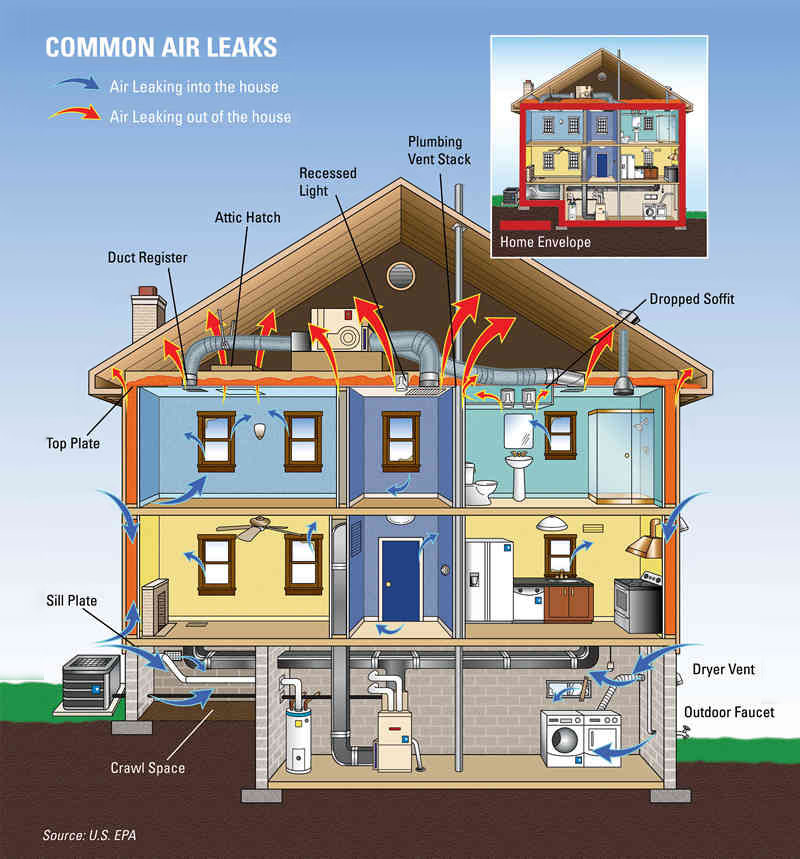
Windows and doors are common culprits, but they are far from the only places a home can leak air. A thorough visual inspection should include the following areas.
Attics, Attic Hatches, and Knee Walls
Attics are often the highest-priority place to find air leaks. Check attic hatches, open stud cavities, knee walls, plumbing pipes, electrical wiring holes, and gaps around light fixtures. Dirty insulation can also point to places where air has been moving through it.
Warm air escaping into the attic can contribute to frost, condensation, and ice-dam conditions. Frost is not always proof of an air leak, but it is a good reason to investigate suspected areas.
Basements, Rim Joists, and Crawl Spaces
Cold air often enters where the foundation meets the wood frame. Inspect sill plates, basement walls, crawl spaces, and rim joists for visible gaps or cracks. Pay special attention to the spaces around plumbing pipes, wiring, dryer vents, and other penetrations through outer walls.
Window Frames and Exterior Doors
Check window frames, door frames, and exterior doors for cracked caulk, worn weatherstripping, or a loose door sweep. Doors and operable windows need a tight seal when closed but must still open and close properly.
Electrical Outlets, Fixtures, and Vents
Electrical outlets, switch plates, recessed light fixtures, and exterior vent covers can all leak air. Foam gaskets behind electrical outlets on exterior walls can help with smaller drafts. Kitchen fans, bathroom fans, and dryer vents should vent outdoors, but the gap around the duct or vent penetration may need sealing.
How to Find Air Leaks
Start with a careful visual inspection inside and outside your home. Look for visible gaps, damaged caulk, loose weatherstripping, and places where daylight shows around windows and doors.
On a cool, windy day, you can also use a smoke pencil or lit incense stick near suspected areas. If the smoke stream moves sideways, is pulled toward a gap, or blows into the room, you may have found a place that leaks air. Keep smoke away from open flames and fuel-burning appliances.
A professional assessment can provide more detail when the issue is hidden or widespread.
Blower Door Testing and Thermal Imaging
A blower door test uses a powerful fan installed in an exterior door to depressurize the home and reveal air leakage locations. It can measure overall air tightness and help identify where to focus improvement work.
A thermal camera can also help reveal surface-temperature patterns associated with air leaks or missing insulation. For the clearest results, thermal imaging is usually done when there is a strong temperature difference between indoors and outdoors; making Winnipeg winters an ideal time for an inspection.
Above All Insulation’s thermal imaging service provides annotated infrared images and recommendations to help homeowners understand where energy loss may be occurring.
Effective Ways to Fix Air Leaks
Seal Stationary Gaps
Use a suitable caulk for small, stationary cracks around window frames, baseboards, and exterior penetrations. For larger irregular gaps, low-expansion spray foam may be appropriate. Sealing gaps around pipes, wiring, and ducts can make a noticeable difference.
High-temperature caulk and metal flashing are reserved for fireplace flues, furnace vents, and other hot components. These areas require proper clearances and are best assessed by a qualified professional.
Install Weatherstripping
Install weatherstripping around exterior doors and operable windows, then add or replace a door sweep where needed. This is often one of the simplest ways to fix air leaks without replacing the entire window or door.
If windows and doors are still drafty after basic maintenance, a professional can help determine whether the issue is the seal, the installation, or the unit itself.
Air Seal Before You Add Insulation
Before you add insulation to an attic, address the accessible air leaks around attic hatches, open framing, plumbing stacks, and electrical penetrations. Fibreglass insulation, cellulose, and other insulation products perform better when unwanted airflow is controlled first.
Important: if you find vermiculite insulation in an older home, do not disturb it. Vermiculite insulation may contain asbestos. Manitoba Health recommends avoiding disturbance and consulting a qualified professional before renovation work. Learn more from Manitoba Health.
Check Ductwork and Ventilation
Leaky ductwork can waste heated or cooled air, especially when ducts run through unconditioned spaces. Duct joints are typically sealed with mastic or approved foil tape—not ordinary cloth duct tape.
Do not seal active exhaust outlets. Proper ventilation is essential for controlling moisture and maintaining healthy indoor air. Homes with fuel-burning furnaces, water heaters, fireplaces, or stoves should also have working carbon monoxide alarms and should be assessed carefully before major air-sealing work.
A Simple Seasonal Check for Winnipeg Homeowners
Before winter, inspect attic hatches, window frames, exterior doors, rim joists, and known draft areas.
Before summer, check dryer vents, weatherstripping, caulk, and exterior vent penetrations. Revisit any rooms with persistent cold spots, uneven temperatures, or rising energy bills.
When to Call a Professional
DIY work is suitable for many visible gaps, but professional help is wise when you notice attic frost, persistent drafts, moisture problems, inaccessible leaks, or signs of energy loss that do not improve after basic repairs.
A blower door test, thermal camera inspection, and insulation assessment can help prioritize the right improvements instead of simply chasing every little gap in the house.
Ready to improve your home’s comfort and energy efficiency? Contact Above All Insulation to discuss thermal imaging, insulation, and draft-sealing recommendations for your Winnipeg home.
Frequently Asked Questions
Do I need to replace my windows to fix air leaks?
Not always. New weatherstripping, caulk, foam seals, or a repaired door sweep can resolve many drafts around windows and doors.
Is air sealing safe in a home with a gas furnace or fireplace?
Yes, but major work should account for proper ventilation and combustion safety. Keep carbon monoxide alarms working and consult a qualified professional if you have fuel-burning appliances.
Can thermal imaging find every air leak?
Thermal imaging can highlight temperature differences that may indicate air leaks or missing insulation. It is most effective when interpreted alongside a visual inspection and, where needed, a blower door test.