
Attic Insulation Upgrades For All Types Of Homes
Depending on the age and style of your home, Above All Insulation can upgrade the insulation in your attic, basement, crawl space, and exterior walls. We insulate all home types; including more complex 1½ and 2½ storey attics with knee wall areas.
Every home is different, and older Winnipeg homes in particular require careful evaluation before upgrading insulation.
Achieving R-Value Standard with Proper Ventilation & Moisture Control
The goal for most attic upgrades is to insulate horizontal attic areas to R-50, which aligns with current Manitoba building code requirements for new homes (2020 National Building Code, Section 9.36).
However, insulation alone is not the solution.
We focus on:
- Proper air sealing
- Vapour control
- Maintaining ventilation pathways
Winnipeg’s long, cold winters can allow condensation to accumulate in attics for months before it “drops out” during spring melt. Without proper air sealing and ventilation, simply adding more insulation can worsen moisture issues.
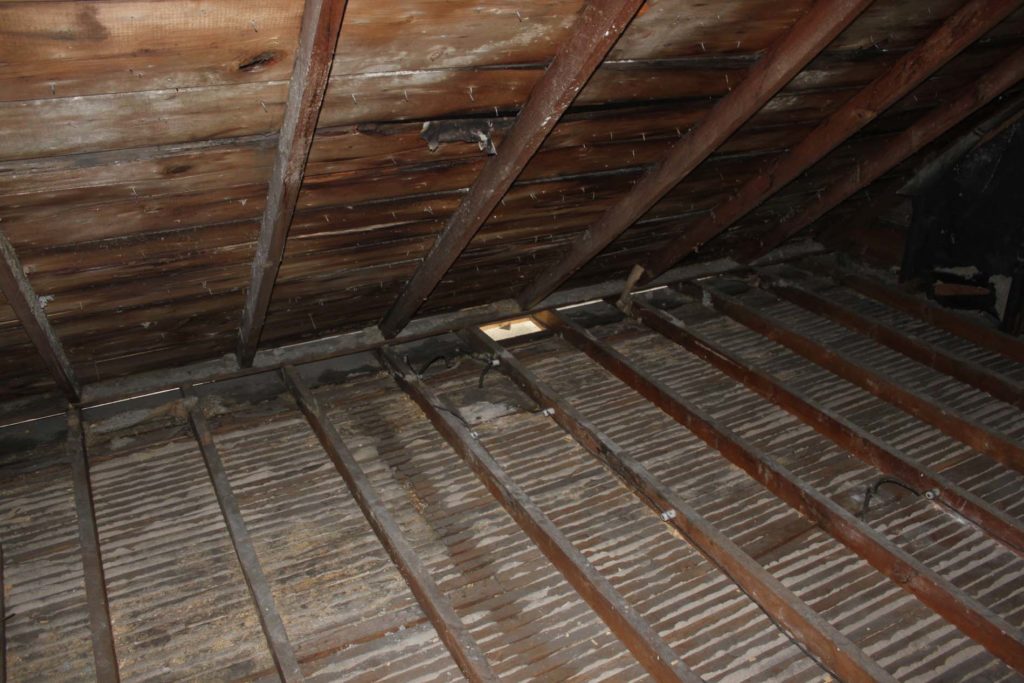
For many older homes, we remove existing insulation and install 2″ of closed-cell polyurethane spray foam across the attic floor. This creates:
- A continuous vapour seal
- An air barrier at ceiling penetrations
- High-performance thermal resistance
Blown-in cellulose insulation is then installed over the spray foam to bring the total R-value up to R-50.
When to Consider R60 Insulation
Upgrading to R-60 can improve energy efficiency, but it’s not always appropriate. We consider attic height, ventilation capacity, and the risk of insulation contacting the roof deck before recommending higher levels.
Installing Attic Insulation
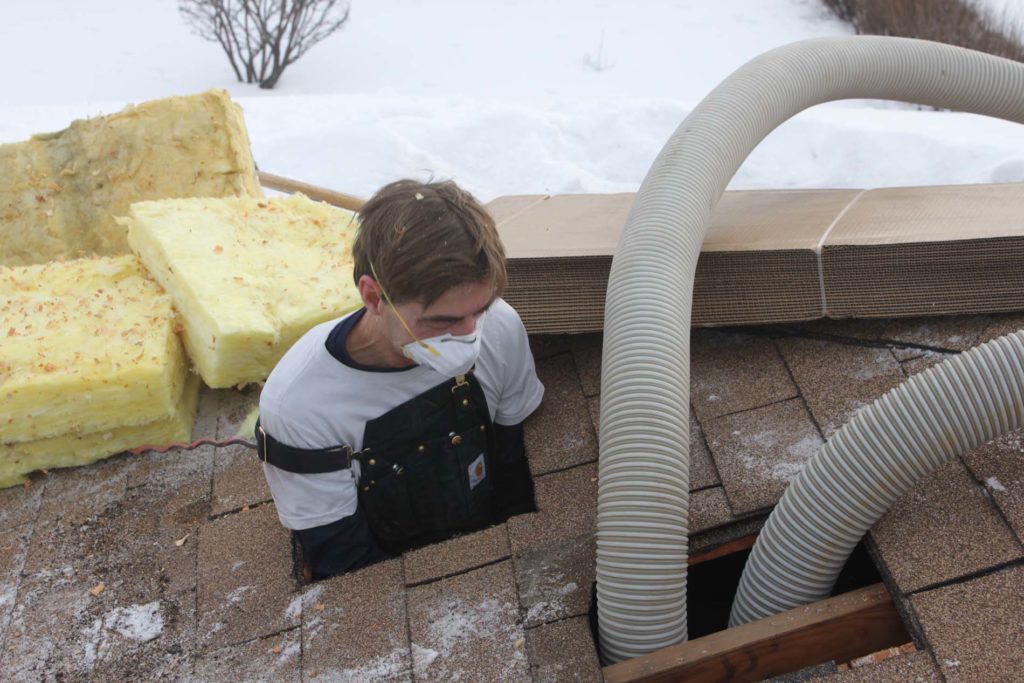
In most cases, we access the attic through a roof vent rather than through your home. We remove an existing vent, complete the installation, and install a new vent once the work is finished. This minimizes disruption and keeps dust out of your living space.
If insulation removal is required, we use professional equipment to ensure proper air sealing and preparation before installing new materials. We also inspect attic penetrations and install air chutes where needed to maintain proper airflow.
Special Considerations for Older Homes
Older homes often have limited space, inconsistent vapour barriers, or existing insulation that has settled over time. Adding insulation without addressing these factors can increase the risk of frost, condensation, or ice dams.
We evaluate the entire attic system, insulation, air sealing, and ventilation; before recommending upgrades.
FAQ
Is adding more insulation always a good idea?
Not necessarily. Without proper air sealing and ventilation, adding insulation alone can trap moisture and increase condensation risks. The attic must function as a complete system.
Do you need to remove old attic insulation?
Only when necessary. If insulation is damaged, compacted, or interfering with air sealing, removal is recommended. In other cases, a top-up may be sufficient.
Why install spray foam before adding cellulose?
In many older homes, we apply a 2″ layer of closed-cell spray foam first to create a continuous air and vapour barrier. Blown-in cellulose is then added to achieve the target R-value. This hybrid approach improves overall performance.
Will attic insulation prevent ice dams?
Proper insulation and air sealing can reduce the likelihood of ice dams by limiting heat loss into the attic. However, severe weather conditions can still cause ice formation, even in well-insulated homes.
How long does attic insulation installation take?
Attic top-ups are typically completed in one day. Full attic restoration projects (removal, spray foam, and insulation installation) may take multiple days depending on scope.
Get a Professional Assessment
Contact us today to schedule a consultation and determine the best attic insulation solution for your home. We’ll assess your attic system and recommend an upgrade that meets current standards and performs in Winnipeg’s climate.