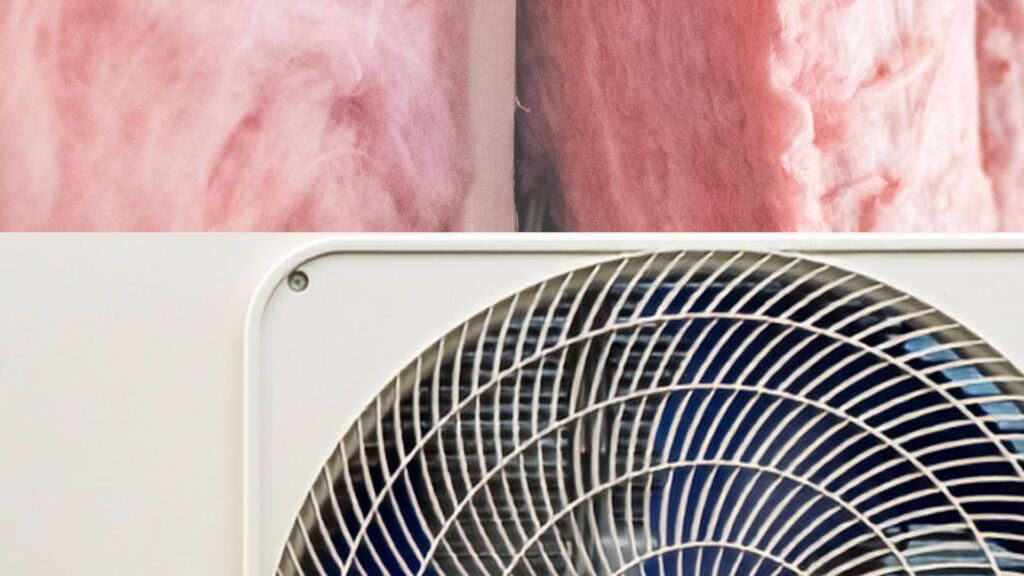
Your air conditioner does not cool your home in isolation. While the AC system removes heat from the indoor air, heat continues to enter through the roof, exterior walls, windows, air leaks, appliances and other sources.
If heat enters faster than the air conditioning system can remove it, your home may become difficult to cool—even with a newer, high-efficiency air conditioner.
The connection between insulation and AC system performance comes down to cooling load: the amount of heat and moisture your system must manage to maintain a comfortable indoor environment. Proper insulation and air sealing can reduce that load, helping a correctly operating AC system maintain more consistent temperatures without consuming unnecessary energy.
What Insulation Changes; and What It Does Not
During the summer, heat naturally moves from warmer areas toward cooler ones. Insulation provides thermal resistance that slows this heat flow through your attic, walls and other parts of the building envelope.
Air sealing performs a related but different job. It limits uncontrolled airflow through gaps around attic hatches, plumbing stacks, wiring, windows and other openings where warm outdoor air can enter and conditioned air can escape.
Together, effective insulation and air sealing can help:
- Reduce summer heat gain
- Keep cool air inside the living space
- Help rooms remain comfortable after the AC cycles off
- Reduce temperature fluctuations between different parts of the home
- Lower cooling-related energy consumption
- Support better overall energy efficiency
However, insulation does not change the mechanical efficiency of an AC unit, repair damaged internal components or correct restricted airflow. It creates a better-performing home around the air conditioner, reducing the amount of work required to keep that home comfortable.
Is Your Air Conditioner Running Too Much?
Long AC cycles do not automatically indicate a problem. During Winnipeg’s hottest summer weather, a properly sized air conditioning system may operate for extended periods while maintaining the thermostat setting.
What matters is whether the system is producing cool air, maintaining the desired temperature and keeping the home reasonably comfortable.
The following signs may help you determine where to start looking.
The Building Envelope May Be Contributing If:
- Upstairs rooms are consistently warmer than the main floor
- Certain rooms are difficult to cool every summer
- The temperature rises quickly after the AC turns off
- Ceilings or walls feel noticeably warm
- You experience both summer hot spots and winter drafts
- Existing insulation appears thin, uneven, compressed or missing
- Energy bills are high without a sudden change in AC performance
These patterns suggest that heat may be entering the home too easily or that cool air is escaping through poorly insulated or leaky areas.
For a detailed explanation of the areas that commonly need attention, read our guide to better insulating your home for summer.
An HVAC Technician Should Inspect the System If:
- The AC suddenly stops cooling properly
- Airflow from the vents is unusually weak
- The system blows warm or inconsistent air
- The AC turns on and off every few minutes
- You hear unusual noises from the equipment
- Water collects around the indoor unit
- Ice forms on the evaporator coil or AC lines
- The system trips a breaker or will not start
Frozen coils and AC lines are not reliable signs of poor insulation. They are more commonly associated with restricted airflow, dirty filters, low refrigerant or other mechanical problems. A frozen air conditioner should be turned off and professionally inspected to prevent additional damage. Carrier provides further guidance on frozen AC coils.
How Insulation Affects AC Runtime and Cycling
When a home experiences excessive heat gain, the air conditioner must remove more heat to reach the thermostat setting. This can increase runtime and energy consumption, particularly during periods of extreme heat.
Better insulation does not necessarily mean the air conditioning system will run only in short bursts. In fact, frequent short cycling can indicate that the unit is oversized, airflow is restricted, the thermostat is malfunctioning or the system requires service.
A properly matched system generally cools the home through steadier operating cycles. Insulation and air sealing help by reducing the amount of outside heat the system must overcome, giving it a better chance of maintaining stable temperatures.
The result may be less total cooling demand, but the exact change in runtime depends on the weather, thermostat setting, equipment condition, ductwork and other characteristics of the home.
What About Indoor Humidity?
Air conditioning also removes moisture from indoor air. This is particularly important during Winnipeg’s hot and humid summer weather.
Air sealing can help reduce the amount of humid outdoor air entering through cracks and gaps, but insulation itself does not dehumidify a home. Indoor humidity also depends on AC sizing, ventilation, indoor moisture sources and how long the cooling system operates during each cycle.
An oversized air conditioner can cool the air quickly and shut off before removing enough moisture. The home may reach the thermostat setting but still feel humid or uncomfortable. For that reason, installing a larger AC unit is not always the best solution to a summer comfort problem.
Persistent humidity should be investigated rather than automatically blamed on poor insulation. The cause may involve air leakage, equipment sizing, ventilation, drainage or another moisture issue.
Assess Insulation Before Replacing Your AC
If you are planning to replace your air conditioner, it may be worthwhile to assess your insulation and air sealing first.
Building-envelope improvements can reduce the home’s cooling load. If the new air conditioning system is selected before those upgrades are considered, it may be sized around heat gain and air leakage that will no longer exist after the work is completed.
A qualified HVAC contractor should calculate the required cooling capacity based on factors such as:
- The size and layout of the home
- Insulation levels
- Air leakage
- Window size and orientation
- Local climate conditions
- Existing ductwork
- Planned energy-efficiency improvements
Natural Resources Canada notes that AC sizing should consider the home’s insulation levels and other building characteristics. Bigger equipment is not automatically better, especially when excess capacity causes frequent cycling or inadequate humidity control. Learn more from Natural Resources Canada’s air-conditioning guidance.
What an Insulation Assessment Can Identify
An insulation assessment can help determine whether the building envelope is contributing to poor AC performance or whether an HVAC problem is the more likely cause.
Depending on the home, the assessment may include checking:
- Insulation depth, coverage and condition
- Gaps around attic and ceiling penetrations
- The attic access hatch
- Signs of moisture or damaged insulation
- Ventilation chutes and soffit airflow
- Temperature differences revealed through thermal imaging
- Areas where uncontrolled air leakage may be occurring
Not every problem requires a complete insulation replacement. Some homes may benefit from targeted air sealing or an attic insulation top-up, while damaged or unsuitable insulation may need to be removed before new insulation is installed.
Above All commonly pairs attic reinsulation with targeted air sealing and ventilation improvements. In older or space-constrained attics, insulation levels must be balanced with available clearance and the need to keep ventilation pathways open.
Improve AC Performance by Reducing the Cooling Load
A high-efficiency air conditioner can only do so much when the surrounding home gains heat too quickly. Proper insulation and air sealing support AC performance by slowing heat transfer, reducing uncontrolled airflow and helping the home hold a more consistent temperature.
If your air conditioner is blowing warm air, freezing or showing another sudden mechanical problem, contact an HVAC technician. If the system works but your upstairs remains hot, rooms cool unevenly or the home quickly becomes uncomfortable after the AC turns off, the insulation and building envelope may deserve a closer look.
Above All Insulation can assess your attic and other problem areas, identify insulation and air-sealing opportunities, and recommend an appropriate solution for your Winnipeg home.
Request a free insulation quote to find out whether better insulation could reduce your home’s cooling load and support more effective AC performance.